
Alliance Planning & Probate: How a Three-State Estate Planning Practice Turned a Website Into a Client Confidence Engine
Project Overview
Nancy Goodman built Alliance Planning & Probate on personal attention, transparent pricing, and more than 20 years of expertise in estate planning, probate, elder law, and contract matters across Georgia, North Carolina, and South Carolina.
The problem: her website wasn't reflecting any of it.
Prospective clients researching estate planning or probate, often during some of the most stressful moments of their lives, encountered a site that created more questions than answers. No clear navigation. No transparent pricing. No process explanation. No reason to choose Alliance over the dozens of other firms appearing in the same search results.
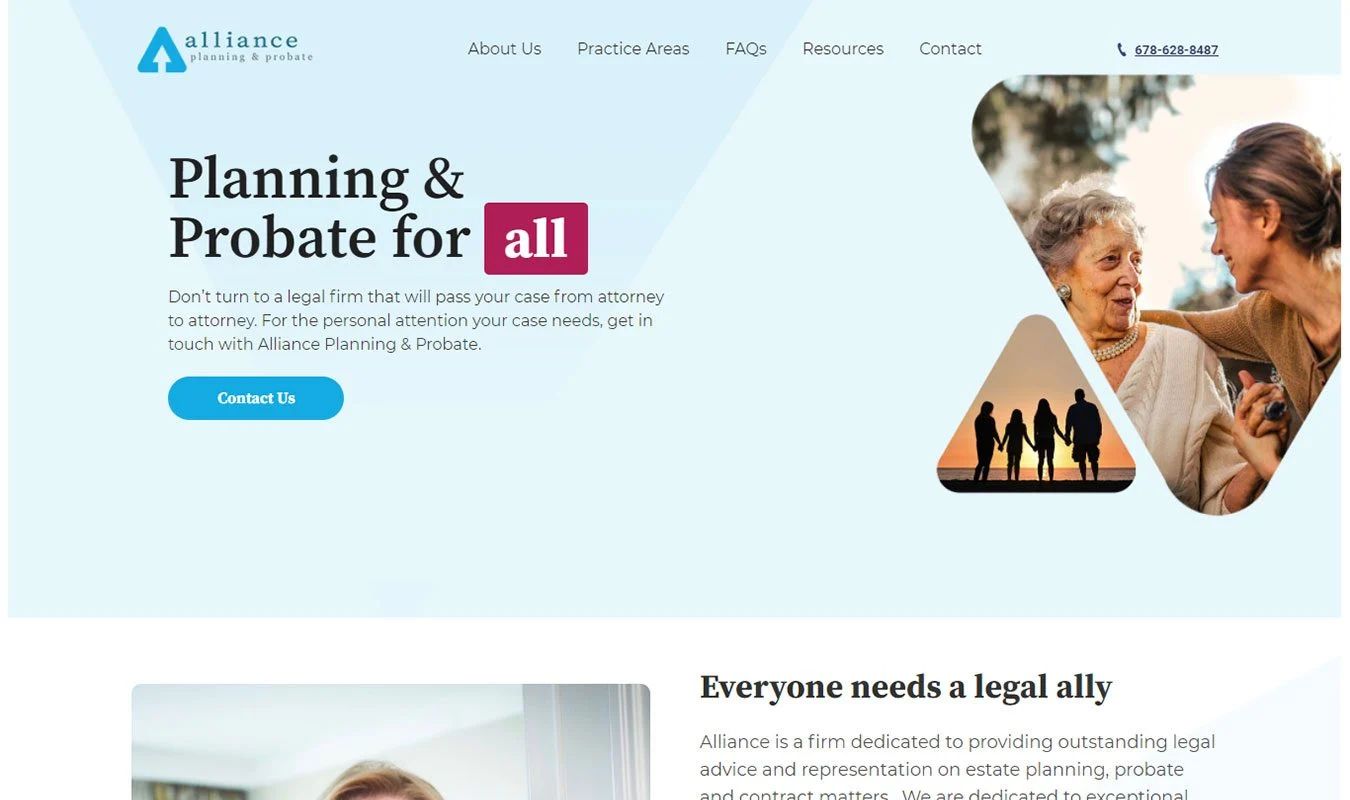
Code Conspirators rebuilt it from the ground up: a digital presence that delivers the same clarity, warmth, and confidence that Nancy's clients experience in person, before they ever pick up the phone.
The Challenge: A Practice Built on Trust, With a Website That Wasn't Building Any
Prospects Arriving in Emotional Distress, With No Clear Path Forward
Estate planning and probate clients aren't comparison-shopping casually. They're grieving a loss, worried about an aging parent, or navigating a family dispute. They arrive anxious and need to feel confident quickly. A website that buries practice area information, hides pricing, and offers a generic "contact us" form doesn't reduce that anxiety, it compounds it.
A Clear Competitive Advantage That Wasn't Coming Through
Nancy's core differentiator is direct: clients work with her, not with a rotating cast of associates. Her flat-fee, all-inclusive pricing model eliminates billing anxiety. Her three-state licensing demonstrates a depth of expertise most solo practitioners can't match. None of this was visible on the old site, leaving prospects with no reason to choose Alliance over a larger firm or a cheaper generalist.
Multiple Buyer Personas, One Undifferentiated Experience
An adult child handling a parent's estate has different questions than a business owner needing contract review. A 40-year-old planning their first will needs different reassurance than a 70-year-old navigating Medicaid planning. The old site spoke to all of them the same way, which meant it wasn't speaking to any of them effectively.
No Conversion Infrastructure for a Long Consideration Cycle
Legal service decisions, especially estate planning, take time. Prospects research, think, come back, research again. The old site had one conversion path: a contact form. There was no mechanism to capture early-stage researchers, no resources building trust over time, no way to stay present during the consideration cycle.
Our Solution: Built Around the Prospect's Emotional State, Not the Practice's Structure
Problem-Focused Practice Area Architecture
We rebuilt navigation around how prospects think about their legal needs, not how attorneys categorize their services. Each practice area page leads with the emotional driver, not the legal terminology. Plain-language explanations of who needs these services and why. Common situations prospects can recognize themselves in. Clear process overviews eliminating the anxiety of not knowing what to expect.
Transparent Pricing as a Conversion Tool
Rather than hiding fee discussions until the consultation, the site leads with Alliance's flat-fee model: "All fees are quoted up-front so you know exactly what things are going to cost." For prospects who have been burned by hourly billing surprises, or who are simply afraid of what legal help might cost, this transparency isn't just honest. It's a competitive advantage that prequalifies the right clients and builds confidence before the first conversation.
Personal Attention Positioning Throughout
The site repeatedly surfaces the differentiator that matters most in a legal market dominated by large firms: clients work directly with Nancy. Not an associate. Not a paralegal. This message appears where evaluation happens, the homepage, practice area pages, the about section, not buried in a bio nobody reads.
Credibility Signals Where They Do the Most Work
Three-state licensing, 20+ years of experience, frequent lecturer, registered mediator, Nancy's credentials appear contextually throughout the site rather than consolidated in a bio that prospects may never reach. When a prospect is evaluating her expertise on the estate planning page, her qualifications are right there. When they're assessing her probate capabilities, same thing. Credibility in context converts better than a credentials page.
Multi-Stage Conversion Architecture
We built three conversion paths for three types of prospects. Primary: "Call for a flat-fee quote today", a low-commitment, high-value first step that captures prospects who are ready. Secondary: resources and educational content for early-stage researchers building trust over time. Tertiary: multiple contact options throughout the site for prospects who are ready when they reach the bottom of any page.
Urgency That Respects the Prospect
Estate planning has genuine urgency, and probate matters have real deadlines. We incorporated appropriate urgency messaging without manipulation: factual, respectful, and focused on serving the prospect's interest rather than pressuring a decision. The prospect's intelligence is respected throughout.
Mobile Experience Built for Stress Research
Prospective legal clients increasingly research on their phones: often during lunch breaks, in hospital waiting rooms, or in moments of sudden concern. Touch-optimized navigation, scannable content formatted for fragmented reading, tap-to-call integration for immediate contact when anxiety peaks, and fast load times that don't add frustration to an already difficult moment.
Local SEO Foundation
Technical SEO targeting the searches Alliance's ideal clients actually run: "estate planning attorney Atlanta," "probate lawyer Georgia," "elder law attorney," "flat fee estate planning." Organic visibility driving qualified prospects actively seeking exactly what Nancy offers, before they encounter the larger firms with bigger ad budgets.
The Results
A Website That Converts Prospect Anxiety Into Client Confidence
Clear practice area navigation guiding prospects to relevant information. Plain-language content reducing confusion about complex legal matters. Transparent pricing discussion building trust and prequalifying the right clients. Multiple conversion opportunities capturing prospects at every stage of the decision cycle.
Competitive Differentiation That's Actually Visible
Personal attention positioning that distinguishes Alliance from larger firms. Flat-fee pricing model highlighted as a genuine advantage. Three-state licensing and 20+ years of credentials surfaced where they earn trust, not buried where they don't get read.
A Platform Built for Ongoing Growth
Blog and resource architecture supporting content marketing as the practice evolves. Email capture for early-stage prospect nurture. FAQ expansion as common questions emerge. CRM integration readiness for more sophisticated lead management. Nancy's team can update practice area information and add resources without developer involvement.
Specific consultation volume and traffic metrics will be added here as data matures. If current analytics benchmarks are available from this engagement, they belong in this section, even a directional before/after on inquiry volume would significantly strengthen this page.
Key Takeaway: Legal Websites Fail When They're Built for Attorneys Instead of Clients
Prospects researching estate planning or probate are not in a neutral emotional state. They're stressed, uncertain, and evaluating multiple firms simultaneously. The website that wins is the one that reduces their anxiety first: with clear information, transparent pricing, and a voice that sounds like it understands what they're going through.
Nancy Goodman built a 20-year practice on exactly that. Code Conspirators built the website that finally delivers it digitally.